
Sometimes the second time around is worth the wait.
Everyone has a Marry Me Chicken recipe, but what about when the marriage doesn't work out?
There is no recipe for divorce. No carefully measured ingredients, no instructions for knowing when you've had enough, and no guarantee that the result will resemble what you imagined when you began.
I know something about that, having spent twenty years in an unhappy marriage.
I was the first person in my family to get divorced, which was no small distinction in a family where marriage was something you entered intending to keep. The irony is that I'd tried to call off my wedding a month before it happened, only to be met with my mother's rather practical response.
"No. We've already sent out the invitations. You're getting married."
I've thought about that conversation countless times, particularly the extraordinary power we gave appearances and how differently my life might have unfolded if I'd been encouraged to trust myself instead of protecting the guest list. There is something almost comical about the idea that a lifetime commitment could be settled by the price of postage, except when you're the one making it.
My mother was responding to the world she knew, where a canceled wedding could become a family scandal and divorce could follow a woman for years. I understand the expectations of her generation, but understanding them doesn't mean I agree with the choice she made. She was more concerned about the embarrassment of canceling a wedding than the possibility of her daughter entering a marriage she already knew she didn't want.
A wedding lasts a day. The consequences of ignoring your own heart can last considerably longer.
My marriage eventually ended, and I discovered that divorce was nothing like the tidy division the word suggests.
You don't simply divorce a spouse. You lose an extended family, shared traditions, familiar holidays, and the everyday structure of a life. Children make the arithmetic especially painful because suddenly you're dividing something no parent ever imagined having to share: time.
Even when ending a marriage is the right decision, dismantling the future you expected brings grief. I carried the word divorced as though it were an explanation I owed everyone, when the truth was that I was still trying to understand it myself.
What I couldn't see through all that disappointment was how much of my life remained ahead of me.
I gradually learned to make decisions based on the woman I had become rather than the expectations I'd inherited. I discovered new interests, created new traditions, and built a future that didn't require anyone else's approval.
The greatest freedom after divorce isn't being free of another person. It's becoming free to be yourself.
That freedom arrived through ordinary choices, through trusting my judgment, learning to be alone without being lonely, and understanding that uncertainty didn't mean I was lost.
David came into my life when I had a clearer sense of who I was and what love should feel like. I wasn't looking for someone to rescue me or prove that I was worthy of being loved again because I had already reclaimed a life that felt like my own.
David didn't give me that life. He became someone wonderful to share it with.
Sometimes a second marriage is better than the first because we bring more wisdom to the relationship. We know what matters, what doesn't, and which compromises cost too much. Experience teaches us that loving someone shouldn't require abandoning ourselves, and David was worth every bit of the wait.
I would never suggest that divorce's happy ending is finding another husband. Happiness may arrive through a home of your own, a career, renewed friendships, or the simple pleasure of making decisions without asking permission.
A second chance at happiness doesn't have to come with a second wedding.
You may be grieving a marriage you wanted to save, frightened of disappointing your family, or wondering whether you have the courage to begin again. I won't tell you everything happens for a reason because sometimes people make mistakes, circumstances change, and love simply isn't enough. Disappointment, however, doesn't have to be the final authority on your life.
I often think about the woman who stood a month away from her wedding, afraid to disappoint everyone. I wish I could tell her how much happiness was still ahead and how grateful she would one day be for a future she never could have planned.
I wish she understood that an ending, however painful, could never erase her right to begin again.
The first time, I was afraid to disappoint everyone else. The second time, I knew better than to disappoint myself.
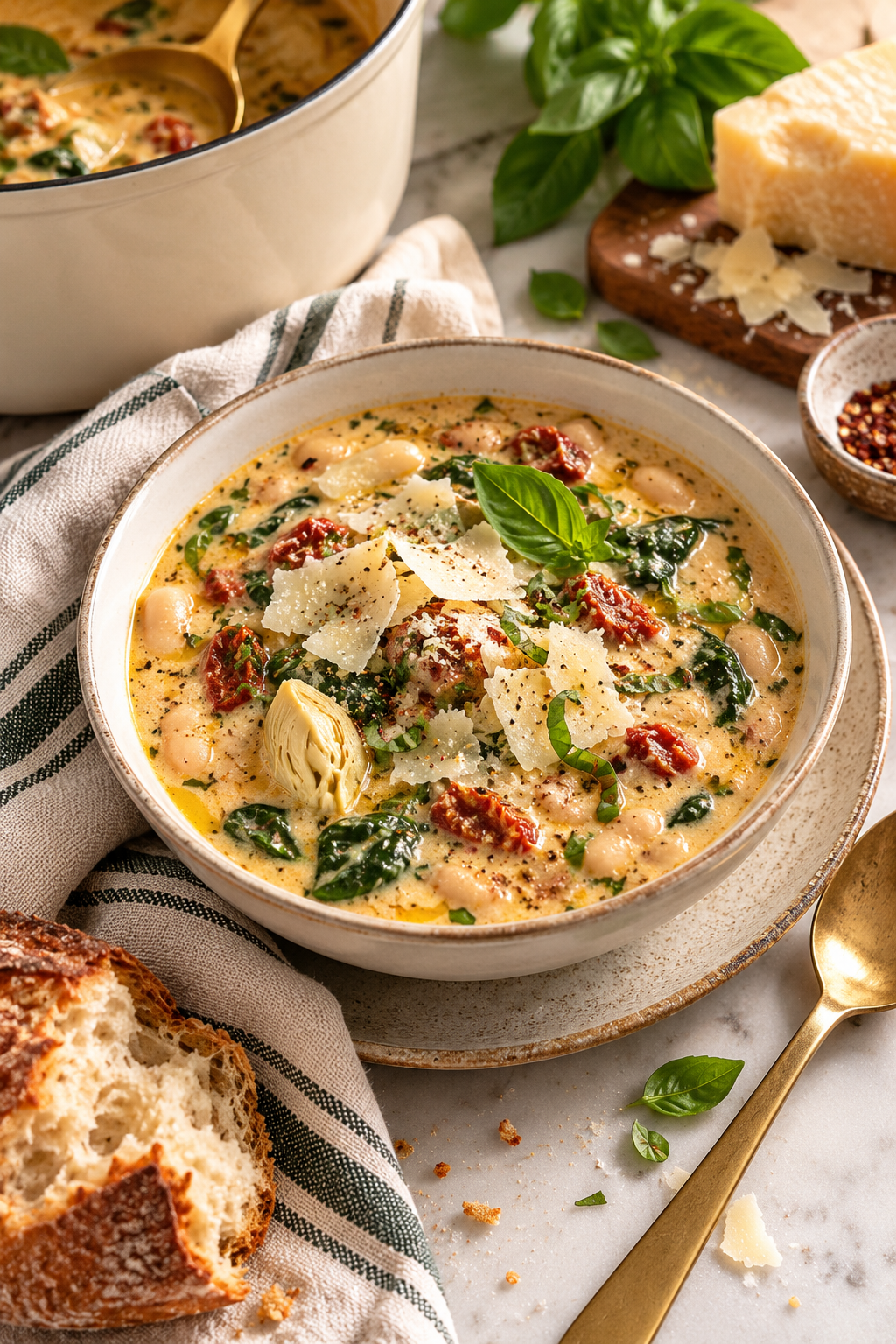
Divorcing You Soup
Serves 6 to 8
Everybody has a Marry Me Chicken recipe, but what happens when the marriage doesn't work out? Having been divorced myself, I can tell you that sometimes the second time around turns out better than the first. This soup keeps everything wonderful about that famous sun-dried tomato cream sauce, introduces spinach and artichokes, and sends the chicken packing. As for its replacement, I'm giving you three choices: cannellini beans, chickpeas, or potatoes. I've learned that finding the right partner makes all the difference, and there's no reason dinner shouldn't come with the same freedom. After all, the second time around, you ought to get to choose what makes you happy.
INGREDIENTS
- 2 tablespoons oil reserved from jarred sun-dried tomatoes
- 1 medium yellow onion, diced (about 1½ cups)
- 6 garlic cloves, minced
- 2 teaspoons dried Italian seasoning
- 1 teaspoon dried oregano
- ¾ teaspoon dried thyme or 1½ teaspoons fresh thyme leaves
- ½ to ¾ teaspoon crushed red pepper flakes
- 1 (8.5-ounce) jar oil-packed sun-dried tomatoes, drained and chopped, oil reserved
- 3 teaspoons Dijon mustard
- Choose one: 3 (15-ounce) cans cannellini beans, drained and rinsed (about 4½ to 5 cups) OR 3 (15-ounce) cans chickpeas, drained and rinsed (about 4½ to 5 cups) OR 1½ pounds (24 ounces) Yukon Gold potatoes, scrubbed and diced into ½-inch pieces, skins on (about 3½ to 4 cups)
- 4 cups low-sodium vegetable or chicken stock, plus more as needed
- 1 tablespoon Better Than Bouillon Roasted Garlic Base or Roasted Chicken Base
- 2 bay leaves
- 1 teaspoon kosher salt, plus more to taste
- ¾ teaspoon freshly ground black pepper, plus more to taste
- 2 (14-ounce) cans artichoke hearts packed in water, drained and quartered
- 4 ounces full-fat cream cheese, softened and cubed
- 1½ cups half-and-half
- ½ cup freshly grated Parmesan cheese
- 12 ounces fresh baby spinach
- ⅓ cup chopped fresh basil
- 2 tablespoons unsalted butter
- Freshly grated Parmesan cheese, fresh basil leaves, crushed red pepper flakes, for serving
INSTRUCTIONS
- Heat reserved sun-dried tomato oil in a large Dutch oven over medium heat. Add onion and cook, stirring occasionally, for 5 to 7 minutes, until softened.
- Add garlic, Italian seasoning, oregano, thyme, and crushed red pepper flakes. Cook for 30 to 60 seconds, stirring constantly, until fragrant. Stir in chopped sun-dried tomatoes and cook for 1 to 2 minutes. Add Dijon mustard and stir for another 30 seconds.
- If using cannellini beans or chickpeas: Add drained beans or chickpeas, stock, Better Than Bouillon, bay leaves, salt, and black pepper. Bring to a gentle simmer, partially cover, and cook for 15 to 20 minutes to allow flavors to develop. For a thicker broth, mash approximately ½ cup cannellini beans against the side of the pot, leaving the remaining beans whole.
- If using potatoes: Add diced potatoes, stock, Better Than Bouillon, bay leaves, salt, and black pepper. Bring to a gentle boil, then reduce heat to a steady simmer. Partially cover and cook for 20 to 30 minutes, or until potatoes are completely fork-tender. Cooking time may be longer depending on the size of the pieces.
- Stir in artichoke hearts and simmer for 3 to 5 minutes, until heated through. Remove bay leaves.
- Reduce heat to low. Place softened cream cheese in a medium bowl and gradually whisk in approximately ¾ cup hot broth from the pot until smooth. Stir cream cheese mixture back into the soup.
- Add half-and-half and Parmesan cheese, stirring gently until incorporated. Keep heat low and avoid boiling.
- Add baby spinach in handfuls, stirring gently until wilted, approximately 2 to 4 minutes. Stir in fresh basil.
- Remove pot from heat and stir in butter until melted. Taste and adjust salt and black pepper as needed. If soup is thicker than desired, add additional warm stock, ¼ cup at a time.
- Ladle into bowls and garnish with additional Parmesan, fresh basil, and crushed red pepper flakes, if desired. Serve with crusty sourdough bread.
STORAGE
Refrigerate: Cool and transfer to an airtight container. Refrigerate for up to 4 days.
Reheat: Warm gently on the stovetop over medium-low heat, stirring occasionally. Add a splash of stock or half-and-half if needed to loosen the broth. Avoid boiling.
Freeze: Not recommended, as the cream-based broth may separate when thawed. Potatoes may also become grainy.
KITCHEN NOTES
Cannellini beans are the preferred choice for their tender, creamy texture. Chickpeas offer a firmer bite, while Yukon Gold potatoes create a heartier variation. The potato version may require additional cooking time; check tenderness rather than relying solely on the timer.
The full tablespoon of bouillon contributes significant sodium. Taste the finished soup before adding additional salt, especially if using chicken stock.

